
Cerro Gordo Multi-Day Arrest Reports
The county's own CGSO Daily Media Report is the file to open. You reach it through the sheriff's Media Downloads page. Unlike the current jail population PDF, this one is built around incidents rather than inmates. Warrant arrests, jail transports, traffic stops, alarms, and crashes all appear in its rows. So do suspicious-person and suspicious-vehicle calls. Each line tells you when and where sheriff activity was logged. It cannot tell you who was involved. An event code alone carries no name.
One recent file ran 159 rows across five pages. It spanned roughly a week. The depth shifts as each new report replaces the last. Cerro Gordo County promises no weekly archive here. The file is not a complete ledger. It does not track every jail booking.
For the current link and stated cadence, turn to the county. The official Media Downloads page is the county-controlled source.

The screenshot shows the county's Media Downloads entry point. Trust the live page and the current PDF over any saved copy.
Read Cerro Gordo Arrest Reports
Start with the print date on the report. Then work backward by call-for-service time. "CFS" means call for service. It is the agency's record of a dispatched or logged event, and it is not a jail booking number. Keeping that distinction straight makes the whole document easier to read.
- Open the live Daily Media Report from the sheriff download page.
- Record its printed date before relying on an entry.
- Find the relevant date, city, address, or incident code.
- Copy the CFS number for a focused agency-record request.
- Use the jail roster only if the question shifts to current custody.
- Use Iowa Courts Online for filed charges and disposition.
A "Warrant Arrest" code shows an arrest-related call was logged. No name, charge, bond, or outcome comes with it. "Jail/Inmate/Other Transport" often describes movement, not a fresh arrest. Traffic stops may close without any booking. So may suspicious-person calls. Read each row as a pointer to an incident.
Note: Save the CFS number, date, place, and code because those details help the Sheriff locate an older incident file.
Cerro Gordo Blotter Fields
The media report carries fewer fields than a booking sheet. Time, place, and event classification are its whole value, and the missing columns matter just as much as the published ones.
| Field | How to read it |
|---|---|
| CFS Date/Time | When the call was logged, not necessarily a jail booking or court filing time. |
| CFS number | The agency reference useful when requesting the underlying public record. |
| Address | The location tied to the call; it does not establish anyone’s residence. |
| City | The reported municipality or location context. |
| Incident code | A broad event label such as warrant arrest, transport, traffic stop, or collision. |
| Not shown | No person name, jail ID, charge list, bond, mugshot, or court disposition was observed. |
Names, jail IDs, charges, bond, and a Mugshot column live elsewhere. They sit in the separate current-population report. Merging the two files without a firm identifier invites mistakes. One blotter event can easily attach to the wrong person. When identity matters, request the releasable incident or arrest report from the Sheriff. Use the CFS number and date.
When Cerro Gordo Reports Update
Cerro Gordo County states a daily refresh time. The Daily Media Report updates every day at 3:05 p.m. Central Time. No other sheriff feed here carries a stated publication time. That schedule is not a guarantee. A call may still be under review at deadline. An entry may post later than the event itself. A named booking may never appear at all, since reports reflect coding and system timing.
The county publishes no weekend or holiday exception. A Monday file can look heavier simply because the rolling window now holds weekend activity. There is no "weekend surge" rule and no guaranteed holiday schedule. Compare event timestamps against the PDF print date before calling row counts a trend. A longer span can also mean older rows simply lingered in the generated file.
The media file changes constantly. Cached search results, downloaded copies, and stale links can trail the official version. Cerro Gordo County redesigned its public website in 2024. Older search results may point to a retired path because of it. Enter through the current Sheriff Media Downloads page whenever you can.
Cerro Gordo Arrest News Patterns
Local news can add what the media report leaves out. Names, police statements, case context, and booking destinations all show up in coverage. KTTC runs event-driven stories from Cerro Gordo, Mason City, and Clear Lake. Many are built on police releases. NorthIowaToday blends police, jail, and court details in its crime coverage. Globe Gazette serves as the main local newspaper. It follows no fixed mugshot or arrest-gallery schedule. News remains a secondary source for arrest records. It is not a primary one. The KTTC Iowa news section shows that regional story stream.
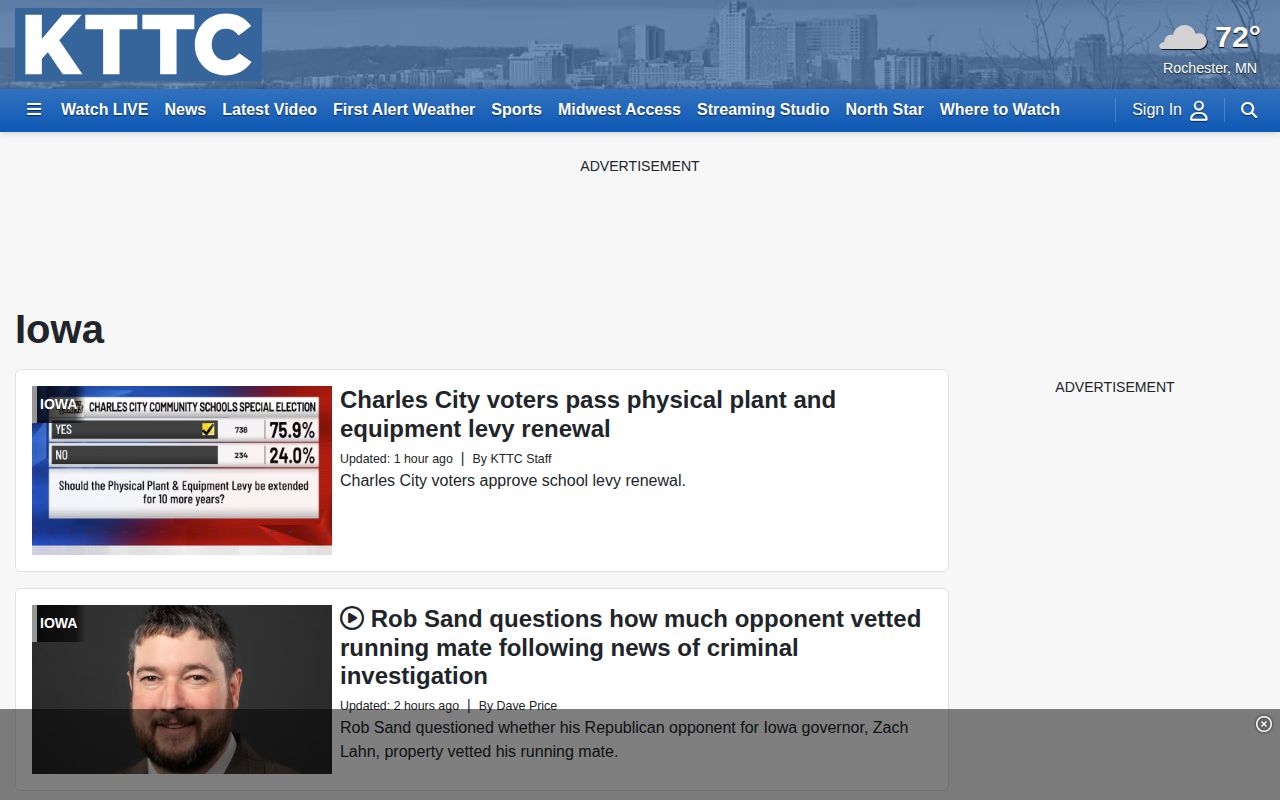
Stories run when editors pick an event. Coverage is selective, not a county arrest log. For a second angle on reported police and court events, the Globe Gazette local section is worth a look.

Cerro Gordo arrest coverage shifts from week to week. Booking details change, so confirm names and charges with the sheriff or county jail before relying on any single report.
Unofficial Cerro Gordo Arrest Indexes
Start with the official sources first. After that, the unofficial indexes can fill gaps. The Arrests.org Cerro Gordo section offers date tabs plus a name search, and it sometimes surfaces older entries. It is not the Sheriff, though. It does not control the source record, and its listings may be stale or incomplete. Busted Newspaper has shown individual Cerro Gordo booking pages, yet its direct county landing path fails. RecentlyBooked lists no current Cerro Gordo page in its Iowa index. Mugshots.com does have a county section. Its displayed counts are site labels. They are not official statistics, so confirm anything against the Sheriff's own record.
Older Cerro Gordo Arrest Records
Cerro Gordo County posts no archive of past media-report editions, and the generated blotter has no fixed retention span. Once an incident leaves the live PDF, a records request is the path. File a focused Iowa Chapter 22 request with the Sheriff's Office. Give the CFS number, date range, address, and city. Add any known names. The office may narrow or redact a request, or charge reasonable actual cost under Iowa law.
If city officers made the arrest, that department holds its own file. The Sheriff keeps county jail booking material. That covers a releasable booking sheet or photo. The Cerro Gordo Clerk of Court holds dockets. Iowa DPS keeps state criminal-history data. The Iowa Department of Corrections holds state-custody files. These systems stay separate, so never assume they form one archive.
The State Historical Society's manual covers general state-record scheduling. It shows no transfer of Cerro Gordo booking photos or jail logs to the State Archives. Ask the original custodian whether an older record sits in storage, was destroyed under a schedule, or moved elsewhere. Old news may be the only surviving lead.
Verify Cerro Gordo Arrest Allegations
A call code, a booking line, and a news story each catch a different moment. Charges can change. They may be amended, reduced, or dismissed later. A case can even start from a citation. Check Iowa Courts Online for Cerro Gordo County, confirm the case number and parties, and read the later disposition.
Need a same-day answer on who is in custody? Use Arrested Today in Cerro Gordo County, since the population report may list a name and booking details that the multi-day media report omits.